Honey Found in Egyptian Tombs Is Still Edible
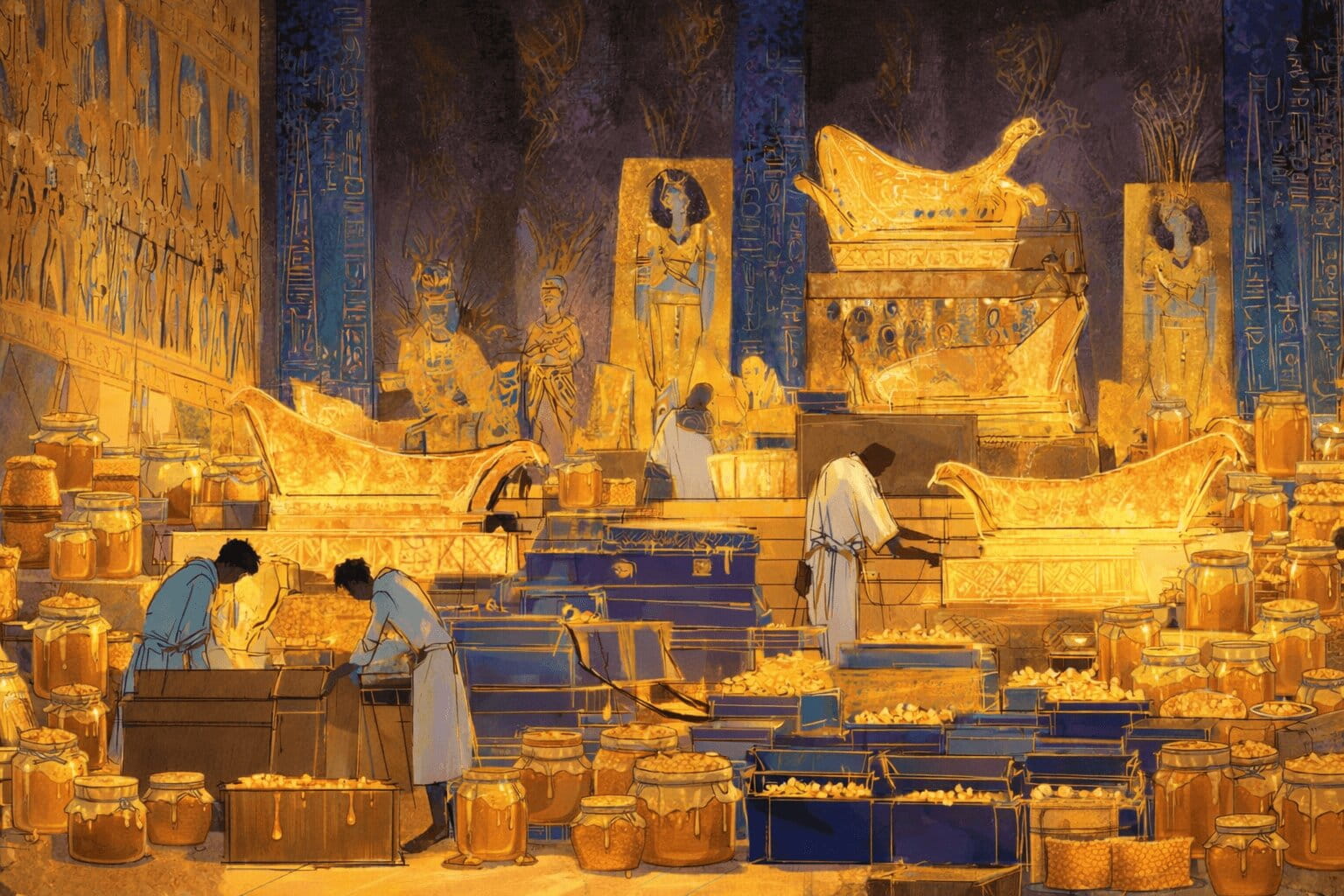
When archaeologists excavated ancient Egyptian tombs, including King Tutankhamun's, they found something unexpected among the gold and artifacts: sealed pots of honey, over 3,000 years old, still perfectly preserved and edible. Not just chemically intact. Actually edible. You could spread it on toast.
This isn't a fluke or an exaggeration. According to Smithsonian Magazine, honey is one of the only foods that truly never spoils. Archaeologists have repeatedly found ancient honey in tombs across Egypt, and when tested, it remains safe for consumption thousands of years after it was sealed away for the afterlife.
So what makes honey essentially immortal? It comes down to a triple-threat of antibacterial properties working in perfect harmony.
First, honey is incredibly dry. Despite being a liquid, it contains only about 18% water. Most bacteria need moisture to survive and reproduce, and honey's hygroscopic nature (meaning it actively absorbs water from its environment) creates conditions too arid for any microorganism to thrive. Any bacteria that lands in honey essentially gets the water sucked out of it through osmosis.
Second, honey is surprisingly acidic. With a pH between 3 and 4.5, it creates an environment hostile to nearly all bacterial life. For comparison, vinegar has a pH around 2.5, and lemon juice sits at about 2. Honey isn't far behind, and that acidity is enough to kill most pathogens on contact.
Third, and perhaps most remarkably, bees contribute their own chemical warfare. When bees process nectar into honey, they add an enzyme called glucose oxidase from their stomachs. When this enzyme breaks down glucose, it produces small amounts of hydrogen peroxide, the same compound you might use to disinfect a cut. This gives honey a built-in, continuously generating antiseptic property that persists for millennia.
The ancient Egyptians didn't understand the chemistry, but they clearly understood the results. They used honey for everything from sweetening food and brewing beer to dressing wounds and embalming the dead. Honey was so valued that it was used as currency, offered to gods, and buried with pharaohs to sustain them in the afterlife.
Modern science has validated what the Egyptians knew intuitively. Medical-grade honey is now used in hospitals worldwide to treat burns and chronic wounds, particularly Manuka honey from New Zealand, which has additional antibacterial compounds. The FDA approved honey-based wound dressings in 2007.
The Egyptians sent honey to the afterlife with their kings because they believed some things could last forever. Turns out they were right. Three thousand years later, that honey is still waiting, perfectly preserved, as if time itself decided to make an exception.